 Felicita Decor
Artificial flower arrangements add color without watering, yet their leaves, petals, and textured centers quietly collect dust. How to clean dusty artificial flower arrangements is not a one-method question. Materials vary widely, including polyester, silk, latex, foam, plastic, and wired stems. Each surface needs a gentler decision.
The U.S. Environmental Protection Agency reports that indoor pollutant concentrations are often two to five times higher than outdoor levels. Fine dust can settle on decorative flowers, nearby shelves, and fabric curtains. The agency also identifies dust control and regular cleaning as practical indoor air-quality measures. This matters in homes with children, pets, allergies, or limited ventilation. A dusty centerpiece may look harmless. It still deserves attention.
This guide presents 10 careful cleaning methods based on common housekeeping practice and material awareness. A soft makeup brush can reach powdery flower centers. A cool hair dryer may loosen dust from sturdy plastic petals. A slightly damp microfiber cloth can refresh broad leaves, but moisture may stain silk or weaken glued details. Always test an unseen area first. That small step prevents regret.
There is no perfect universal technique. Some arrangements tolerate gentle rinsing; others lose shape after one careless soak. The International Executive Housekeepers Association emphasizes consistent, detail-focused cleaning standards across managed spaces. That principle applies at home, too. Clean from the highest petals downward, protect the vase, and inspect hidden stems where dust gathers. Expect a little trial and error. The goal is not showroom perfection, but a cleaner, fresher arrangement that remains beautiful without unnecessary damage.
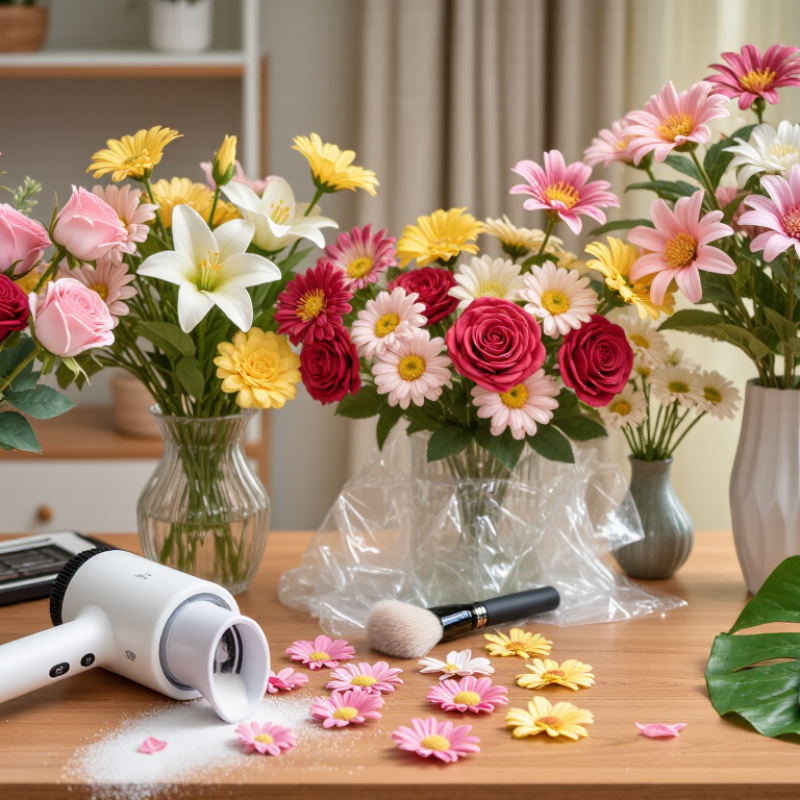
Before cleaning, identify what each part is made from. Artificial flowers may combine polyester petals, foam centers, plastic leaves, and wired stems. Look beneath a petal or inside the foliage for care labels or material clues. A smooth, slightly shiny petal may tolerate gentle wiping, while paper-like petals can stain or buckle with moisture. Check any ribbons, painted details, and glued decorations separately. When the material is uncertain, test a hidden area with a soft, dry cloth. Wait a few minutes and inspect for color transfer or texture changes. Small details matter.
Then assess the arrangement’s condition before moving it. Look for loose petals, cracked stems, brittle leaves, or glue that has turned yellow and flaky. Hold the base steady and gently touch one leaf; if it sheds or bends sharply, avoid brushing it. A soft makeup brush may lift dust from sturdy plastic, but it can catch delicate fibers. Pause here. Check dusty creases and the inside of the container, where grit often collects. If the flowers are faded or fragile, aggressive cleaning may do more harm than dust does. It is tempting to treat every arrangement alike, but mixed materials rarely respond the same way. Note weak spots first, even if that feels fussy.
| # | Cleaning method | Suitable materials | How to do it | Check first / avoid when |
|---|---|---|---|---|
| 1 | Soft-brush dusting | Most fabric, silk-look, plastic, and foam flowers | Use a clean, soft artist’s brush or makeup brush. Sweep gently from the center of each flower outward, supporting delicate petals with your other hand. | Inspect for loose petals and brittle stems. Avoid stiff brushes, which can fray fabric or dislodge parts. |
| 2 | Low-suction vacuuming | Sturdy fabric and plastic arrangements | Cover the vacuum nozzle with a mesh screen or clean stocking and use the lowest suction setting. Keep the nozzle a short distance away; do not pull on petals or leaves. | Test on a hidden area. Skip this method for fragile, shedding, loosely wired, or heavily embellished arrangements. |
| 3 | Cool-air dusting | Plastic and sturdy fabric flowers | Use a hand air blower or a hair dryer on its cool, lowest setting. Direct air from a distance to lift loose dust, working in a ventilated area. | Check that petals, leaves, and decorative pieces are secure. Avoid hot air and strong compressed-air jets, which can warp or detach parts. |
| 4 | Dry microfiber wipe | Smooth plastic leaves and sturdy, non-textured petals | Lightly wipe broad surfaces with a clean, dry microfiber cloth. Hold each leaf near its base so the stem does not bend under pressure. | Try a hidden spot first. Do not rub flocked, fuzzy, painted, or delicate fabric surfaces, which may lose their finish or color. |
| 5 | Shower rinse with cool water | Water-safe plastic arrangements without glued or paper components | Remove the arrangement from its container if possible. Rinse briefly with a gentle stream of cool water, then shake off excess water and air-dry completely. | Check labels, adhesives, wiring, and the base. Avoid soaking fabric flowers, arrangements with foam bases, or pieces with water-sensitive decoration. |
| 6 | Damp-cloth spot cleaning | Colorfast fabric or plastic with localized grime | Dampen a white cloth with cool water and blot the dirty area gently. Use as little moisture as possible, then blot with a dry cloth and allow it to air-dry. | Test for color transfer in an inconspicuous place. Do not scrub, use hot water, or wet wired joints and glued areas. |
| 7 | Mild-soap spot cleaning | Washable plastic or colorfast synthetic fabric | Mix a small amount of mild dish soap into cool water. Dab with a soft cloth, follow with a separate cloth dampened with plain water, and dry thoroughly. | Check colorfastness and construction first. Avoid detergent residue, bleach, solvents, and this method on untreated silk, paper, foam, or glued decorations. |
| 8 | Salt-shake method for removable fabric flowers | Small, sturdy, removable fabric flowers with no glued details | Place flowers in a clean paper bag with a small amount of dry salt. Close the bag and shake gently, then remove the flowers and brush away any remaining salt. | Check that parts are firmly attached and the fabric is not shedding. Do not use on wet, stained, delicate, or non-removable arrangements. |
| 9 | Detail cleaning with cotton swabs | Plastic flower centers, narrow leaf folds, and sturdy decorative details | Use a dry cotton swab to lift dust from small crevices. If needed, use a barely damp swab on a water-safe surface, then dry it immediately. | Inspect for loose pollen-like details, beads, and paint. Avoid pressure that could snag fibers or loosen small parts. |
| 10 | Professional or dry-only care for delicate pieces | Untreated silk, antique flowers, brittle arrangements, and pieces with intricate glued details | Start with gentle dry brushing or low-suction dust removal. For valuable or heavily soiled pieces, consult a textile or floral-restoration specialist before using liquid cleaners. | Look for fading, fraying, cracks, corrosion, loose wiring, and failing adhesive. Avoid washing or soaking when the material or construction is uncertain. |
Before cleaning: Identify the flower material and inspect petals, stems, wiring, adhesives, and the arrangement’s base. Test any damp method on a hidden area, and let all components dry completely before returning the arrangement to display.
Check for care labels and inspect petals, leaves, stems, ribbons, and decorations. Materials may differ within one arrangement.
Yes. Try a soft, dry cloth on a hidden spot. Wait a few minutes and check for color transfer or texture changes.
Look for loose petals, cracked stems, brittle leaves, or flaky glue. If a leaf sheds or bends sharply, avoid brushing it. Pause there.
Use a microfiber cloth, a clean soft brush, or a vacuum on low suction. Keep the tools dry and clean.
Cover the nozzle with mesh or clean fabric to soften suction. Keep the vacuum away from fragile stems.
Use light brush strokes, moving from the flower’s center toward its edges. Turn the arrangement gently to inspect it from different angles.
Remove only what comes away easily. Some dust may remain. Forcing it out can damage petals.
Place an old towel or plain paper on a stable table. Work away from food, open windows, and strong drafts.
Not reliably. Paper-like petals may stain or buckle with moisture, while sturdy plastic may tolerate gentle wiping. I sometimes miss dust inside flower centers, so checking twice helps.
How to clean dusty artificial flower arrangements begins with checking the materials, colors, finishes, and overall condition of the arrangement. Some flowers can tolerate gentle washing, while delicate petals, wired stems, painted details, and glued decorations should only receive light cleaning. Before starting, prepare a soft brush, microfiber cloths, mild soapy water when appropriate, and a protected work area to prevent dust and moisture from spreading.
Begin by removing loose dust with a feather duster, soft makeup brush, or cool air from a distance. For washable flowers, carefully rinse or wipe them with diluted soap, avoiding excessive soaking. Clean fragile parts separately with a slightly damp cloth or cotton swab. After cleaning, shake off excess water, reshape bent petals and leaves, and allow every piece to air-dry completely away from direct heat or strong sunlight. Regular gentle dusting and occasional inspection will help preserve the arrangement’s appearance and reduce the need for intensive cleaning.
