Felicita Decor Felicita Decor

5 Best Ways to Mix and Match Christmas Ornament Themes?

Time:2026-10-14 Author:Oliver
0%

Christmas decorating is no longer limited to matching red baubles with green ribbon. Homeowners now combine vintage glass ornaments, handmade figures, metallic accents, and natural textures. The challenge is creating variety without making the tree look accidental. This guide explores How to mix and match different Christmas ornament themes through five practical approaches.

Consumer behavior supports this creative shift. The National Retail Federation reported that U.S. holiday spending was expected to reach a record $979.5 billion to $989 billion in 2024. Deloitte’s 2024 Holiday Retail Survey also found that shoppers continued seeking meaningful, personalized purchases. Ornaments can meet both needs. A family may pair inherited ceramic angels with modern matte spheres. A small brass star can connect these contrasting pieces. The result feels collected, not commercially assembled.

Interior designer Emily Henderson offers a useful principle: “The best rooms have something to say about the people who live in them.” That idea applies directly to Christmas trees. Choose one dominant color, repeat one material, and allow one theme to surprise you. A failed combination can still reveal what feels authentic. That matters. Professional styling is not only about symmetry. It also involves testing scale, spacing, and visual rhythm under real lighting. Warm bulbs may soften gold ornaments, while cool lights can make silver details feel sharper. These five methods will help you experiment confidently, even when the first arrangement looks slightly wrong.
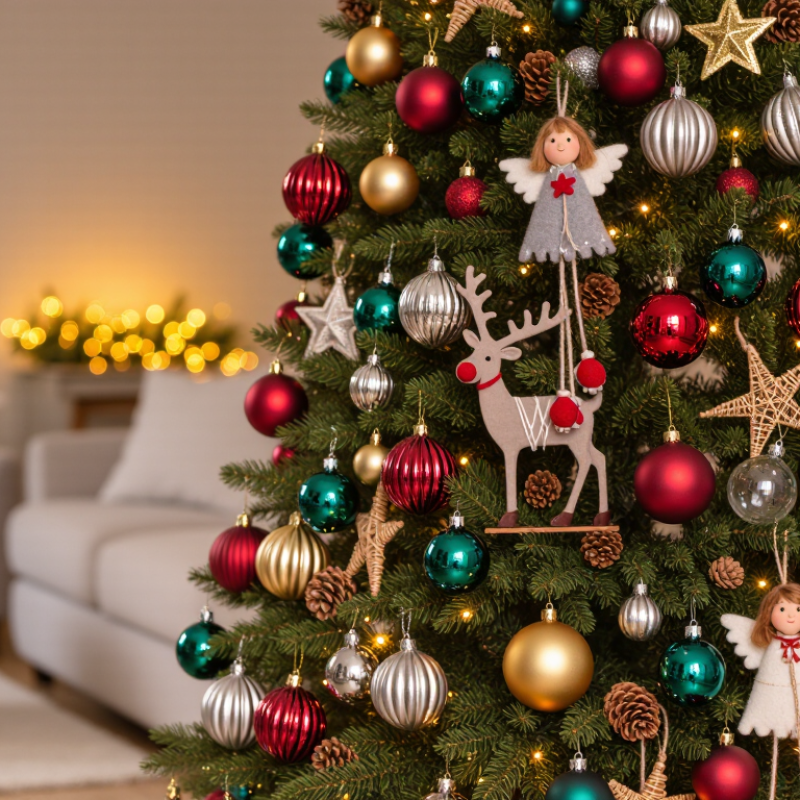
5 Best Ways to Mix and Match Christmas Ornament Themes?

Choose a Unifying Color Palette for Different Ornament Styles

I used to combine ornaments by shape, but the tree often looked crowded. Color created more control. Start with three colors: one dominant, one supporting, and one quiet accent. A warm ivory, muted green, and aged gold can unite glass balls, wooden figures, ribbons, and handmade ornaments. Keep the dominant color on about half of the decorations. Use the supporting shade for balance, then repeat the accent in small, deliberate spots.

Texture should vary while color remains connected. Matte ornaments soften shiny surfaces, while woven or painted pieces add a personal, lived-in quality. I usually place the brightest ornaments near eye level, where they catch attention without overwhelming the tree. Test the palette under both daylight and warm evening lights. Colors can shift more than expected. That was my mistake.

For a calmer display, choose ornaments with similar undertones. Cool whites may clash with creamy whites, especially beside yellow lighting. If the styles feel unrelated, repeat one color at least three times across the tree. Place it high, low, and toward the center. This creates visual rhythm. Leave a few branches less decorated; empty space helps each ornament breathe. I still sometimes add one sentimental piece that breaks the palette. It may not match perfectly, but removing every imperfect detail can make the tree feel strangely impersonal.

5 Best Ways to Mix and Match Christmas Ornament Themes? - Choose a Unifying Color Palette for Different Ornament Styles

A practical guide to combining ornament styles through coordinated colors, balanced proportions, and consistent visual accents.

Mix-and-Match Approach Unifying Color Palette Ornament Styles to Combine Recommended Balance Visual Effect and Placement Tip
1. Classic Evergreen Harmony Deep green, warm white, muted red, and antique gold Matte balls, glossy baubles, wooden figures, and metallic accents 60% green or neutral ornaments, 30% red, 10% gold Creates a traditional and grounded appearance. Place larger matte ornaments deeper inside the branches and use gold pieces near the outer tips.
2. Winter Frosted Contrast Icy blue, white, silver, and a small amount of charcoal Glass-like ornaments, snowflakes, frosted finishes, and ribbed textures 50% white or silver, 35% blue, 15% charcoal details Gives the tree a cool, airy feel. Repeat silver at different heights to connect shiny and matte ornament surfaces.
3. Natural Woodland Layering Sage green, pine green, cream, natural brown, and terracotta Wooden shapes, felt ornaments, pinecones, woven pieces, and ceramic forms 45% green, 30% cream or brown, 15% terracotta, 10% natural textures Adds warmth and texture without appearing crowded. Keep heavier wooden ornaments on sturdy inner branches.
4. Soft Pastel Celebration Blush pink, pale blue, ivory, lavender, and soft champagne Satin ornaments, pearlescent finishes, delicate ribbons, and small decorative figures 55% ivory or pale blue, 25% blush, 10% lavender, 10% champagne Produces a gentle, playful style. Use ivory as the visual anchor so the pastel colors remain coordinated rather than scattered.
5. Dramatic Jewel-Tone Display Emerald, burgundy, navy, plum, and brushed gold Velvet-finish balls, faceted ornaments, metallic shapes, and patterned pieces 50% emerald or navy, 30% burgundy or plum, 20% gold accents Creates depth and a luxurious appearance. Distribute dark colors evenly and reserve brighter gold pieces for focal areas.
General styling rule: Choose two dominant colors, one supporting neutral, and one accent color. Repeating the same accent at the top, middle, and lower sections of the tree helps different ornament styles look intentionally coordinated.

Balance Traditional and Modern Decorations by Design and Shape

Mixing Christmas ornament themes works best when design, not nostalgia, controls the room. I begin with one traditional anchor, such as red glass, wooden figures, or warm white lights. Then I add modern shapes, including smooth spheres, slim drops, and simple geometric forms. This creates contrast without visual confusion. Keep the main color family consistent. Two or three related colors usually feel more intentional than a crowded palette.

Shape creates rhythm. Place larger ornaments near the center or lower branches, where sturdy stems can support them. Repeat smaller shapes toward the tips for a lighter finish. Combine matte, glossy, and textured surfaces carefully. A matte finish softens reflective pieces, while metallic details add controlled brightness. I also leave small spaces between clusters. Crowding hides the design.

Traditional decorations can look fresh when their arrangement changes. Try grouping classic figures in a modern, asymmetrical pattern. Hang similar shapes at different heights instead of forming perfect rows. My own displays sometimes become too balanced. A slightly uneven branch can feel more natural, though it still needs visual weight nearby. Step back several times and inspect the tree from the doorway. The design should guide the eye, not demand attention from every angle.

Combine Natural Textures With Metallic and Glass Accents

Mixing natural textures with metallic and glass accents creates a Christmas tree that feels warm, layered, and thoughtfully collected. Start with pinecones, dried orange slices, woven ribbons, or unfinished wooden ornaments. Their muted surfaces soften the shine of silver, gold, or copper decorations. Glass ornaments then add light and movement, especially near the tree’s outer branches.

I usually place heavier natural pieces closer to the trunk, where branches offer stronger support. Smaller glass ornaments work better toward the tips. Keep one metallic tone dominant, then repeat it in small details, such as thin garlands or ornament caps. Clear glass can reflect nearby lights beautifully, but too much may make the tree feel cold. I have made that mistake before. A few handmade-looking pieces often restore balance.

Tips: Use three textures in every section. Pair rough pinecones with smooth glass and brushed metal. Leave small spaces between ornaments so each surface remains visible. Test the arrangement with the room lights on. Natural materials can look darker than expected at night. Secure delicate glass ornaments carefully, especially on lower branches. If the colors feel disconnected, repeat one shade across ribbons, wooden accents, and metallic details. Perfect symmetry is unnecessary. Slight unevenness can make the display feel more personal.

Create Visual Layers With Varied Ornament Sizes and Placements

Create visual layers by treating your tree like a small, three-dimensional room.

Place the largest ornaments deep inside the branches first. They create weight and prevent empty gaps. Add medium ornaments across the outer surface. Finish with smaller pieces near the tips, where they catch light and movement. Start with structure.

Vary placement instead of forming perfect rows. Hang one large ornament slightly below eye level, then balance it with two smaller pieces nearby. Repeat the pattern around the tree, but leave some spaces quiet. Uneven spacing often feels more natural.

I still overfill the front sometimes, especially when the back looks less visible. That mistake makes the tree feel flat from the side.

Color repetition can connect different themes. Use one shared shade in large, medium, and tiny ornaments.

The National Retail Federation estimated $7.4 billion in seasonal decoration spending during 2023, showing how much attention households give to festive displays.

A 2024 holiday survey from the same organization found that 47% of consumers planned to begin shopping before November.

Earlier decorating makes durable visual planning worthwhile. Add lights behind the ornaments, then place reflective pieces near the front.

The U.S. Energy Information Administration reports that LED bulbs use at least 75% less energy than incandescent bulbs.

Step back several times. A slightly imperfect arrangement may look more personal than perfect symmetry.

Mix Cultural, Personal, and Seasonal Themes With a Common Motif

Mixing Christmas ornament themes works best when one visual idea quietly connects them all. A common motif might be a star, a circular shape, or a simple winter branch. I often begin with one repeated color, such as warm red, soft green, or muted gold. This creates order before the more personal pieces appear.

Cultural ornaments can add meaning when displayed with care and context. Choose symbols your household understands and respects, rather than combining traditions randomly. A painted wooden figure might sit beside a family heirloom from another country. Personal ornaments then bring emotional detail, such as a child’s paper star or a small wedding keepsake. Seasonal pieces, including snowflakes, pinecones, and frosted berries, help the arrangement feel timely without overwhelming its story.

Keep the strongest motif at eye level. Repeat it three or five times around the tree for balance. Vary texture instead of adding more colors. Smooth glass, woven fabric, and rough wood create depth under warm lights. My own first attempt looked too carefully matched. It felt polished, but not alive. I removed several identical ornaments and left one awkward handmade piece near the front. That small imperfection made the display feel more honest. Test the arrangement from across the room, then adjust only what distracts you.

5 Best Ways to Mix and Match Christmas Ornament Themes

A practical 30-ornament plan combines cultural, personal, and seasonal elements while using stars as the common motif that visually connects the display.

FAQS

How many colors should I choose for a mixed ornament collection?

Choose three colors: one dominant, one supporting, and one quiet accent. Keep the dominant color on about half the decorations. Repeat the accent in small, deliberate spots.

How can different ornament styles look connected?

Use color to connect glass balls, wooden figures, ribbons, and handmade ornaments. Similar undertones help different shapes feel intentional. Perfect matching is unnecessary.

Where should I place the brightest ornaments?

Place bright ornaments near eye level. They catch attention without overwhelming the tree. Keep quieter pieces above and below them.

How can I combine matte, shiny, and woven decorations?

Let textures vary while the colors stay related. Pair matte surfaces with shiny glass and woven ribbons. The contrast adds depth.

What should I check before finalizing the color palette?

View the tree in daylight and warm evening light. Creamy colors may look yellow at night. That was my mistake.

Where should natural decorations and glass ornaments go?

Place heavier pinecones and wooden pieces closer to the trunk. Put smaller glass ornaments toward the outer branch tips. Secure delicate glass carefully.

How many textures should appear in each tree section?

Try three textures in each section. Pair rough pinecones with smooth glass and brushed metal. Leave small gaps so every surface remains visible.

How can metallic decorations avoid making the tree feel cold?

Choose one dominant metallic tone and repeat it in small details. Add woven ribbons, wooden accents, or handmade-looking pieces. Clear glass works best in moderation.

Does a Christmas tree need perfect symmetry?

No. Slight unevenness can make the display feel more personal. Leave a few branches open so ornaments can breathe.

What can I do when one sentimental ornament does not match?

Keep it if it carries real meaning. Place it where it feels naturally connected to nearby colors. Not everything must match.

Conclusion

How to mix and match different Christmas ornament themes becomes much easier when you begin with a unifying color palette. Choose two or three main shades to connect traditional, modern, rustic, and elegant decorations, even when their designs are different. Balance classic shapes with contemporary forms, and combine natural textures such as wood, fabric, or dried elements with reflective metallic and glass accents for contrast and warmth.

To make the tree look thoughtfully arranged, create visual layers by varying ornament sizes, heights, and placements. Hang larger pieces deeper within the branches and place smaller decorations toward the outside for dimension. You can also blend cultural, personal, and seasonal themes by repeating a shared motif, color, or symbol throughout the display. This approach keeps the arrangement cohesive while allowing each ornament style to express its own character and meaning.

Oliver

Oliver

Oliver is a seasoned marketing professional with a wealth of expertise in driving brand awareness and engagement. With a deep understanding of our company's product offerings, he consistently delivers high-quality content that enriches our professional blog. His insights not only shed light on......