 Felicita Decor
Felicita Decor
Felicita Decor
Choosing a rug is not merely a finishing touch. It changes how furniture relates, how footsteps feel, and how spacious a room appears. The question “How to choose the right size rug for a decorated living room” deserves more than a quick 5-by-8-foot recommendation.
Professional designers usually begin with the seating layout, not the rug label. For a compact living room, an 8-by-10-foot rug can often hold the sofa’s front legs and two nearby chairs. In a larger room, a 9-by-12-foot rug may anchor every seating piece, leaving a clear border of flooring around the arrangement. The rug should extend beyond the sofa’s sides whenever possible. Even 8 to 12 inches can improve visual balance. Measure carefully.
This matters because renovation decisions are becoming more considered. The 2024 U.S. Houzz & Home Study reported a median renovation spend of $24,000, showing how much homeowners invest in comfortable, coordinated spaces. The American Society of Interior Designers’ 2024 Trends Outlook also emphasizes wellness, personalization, and adaptable interiors. A properly sized rug supports all three by softening movement, defining conversation zones, and adding warmth underfoot.
Still, design rules are not absolute. I have seen a smaller rug succeed when a room required visible wood flooring or easier cleaning. I have also seen an expensive rug look strangely disconnected because it stopped just before the chairs. Measure the room, map the furniture, and leave realistic walking paths. A rug pad helps too. The best choice may be imperfect, but it should feel intentional.
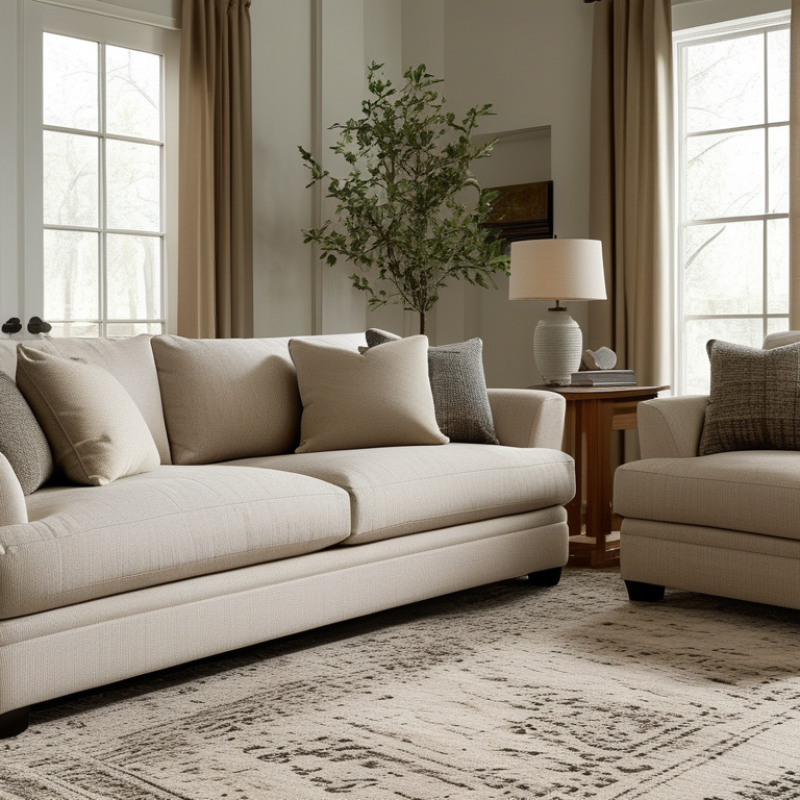
Choosing a rug starts with your living room’s layout, not a standard measurement. Stand at the entrance and observe how people move through the space. Mark pathways between the sofa, doors, windows, and nearby seating. A rug should support movement, not create a narrow obstacle.
Place painter’s tape on the floor to outline possible rug sizes. This simple step reveals awkward proportions before you buy. In a seating area, keep the sofa’s front legs on the rug whenever possible. Chairs should also sit partly or fully on it. This arrangement connects separate pieces and makes the room feel intentional. Leave about 18 to 24 inches of visible floor around the rug when the room allows it. Less space may look cramped, while much more can disconnect the furniture.
Consider the coffee table’s position carefully. It should rest comfortably on the rug without blocking walking routes. Measure the distance between the table and seating before choosing a final size. I have misjudged this step before, selecting a rug that looked generous but left chair legs unstable. The mistake was easy to miss in a showroom. At home, every movement exposed it. For an open-plan room, use the rug to define the living zone without covering every inch. Keep its edges aligned with major furniture lines, but do not force perfect symmetry. Real rooms rarely cooperate.
| Living Room Layout | Typical Room Size | Furniture Arrangement | Recommended Rug Size | Placement Guidance | Key Measurements to Check |
|---|---|---|---|---|---|
| Compact seating area | Up to 10 × 12 ft | One sofa, one or two accent chairs, and a coffee table | 5 × 8 ft | Place the rug beneath the coffee table and allow the front legs of the sofa and chairs to rest on the rug. | Leave approximately 12–18 in of visible floor around the rug where possible. |
| Small apartment living room | 10 × 12 to 12 × 14 ft | Sofa facing a media unit with a compact coffee table | 6 × 9 ft | Center the rug with the sofa and keep the front legs of the main seating pieces on the rug. | Maintain a comfortable walking path of about 24–30 in around major furniture. |
| Standard conversation area | 12 × 14 to 14 × 16 ft | Sofa, two chairs, coffee table, and side table | 8 × 10 ft | Position the rug centrally so the sofa and chairs are either fully or partially anchored by it. | Keep the coffee table fully on the rug, with seating arranged evenly around it. |
| Open-plan living zone | 14 × 16 ft or larger | Large sofa or sectional with multiple chairs and occasional tables | 9 × 12 ft | Use the rug to define the living area without extending into the dining or kitchen circulation zone. | Leave at least 30–36 in for primary walkways and avoid blocking door swings. |
| Large sectional arrangement | 16 × 20 ft or larger | L-shaped sectional, large coffee table, and one or two accent chairs | 9 × 12 ft or 10 × 14 ft | Choose a rug large enough for all sectional feet and the coffee table to sit comfortably on its surface. | Measure the sectional width and depth before selecting the rug; the rug should extend beyond the coffee table on all sides. |
| Floating furniture layout | Medium to large room | Sofa and chairs placed away from the walls to create a central seating group | 8 × 10 ft or 9 × 12 ft | Place the entire seating arrangement on the rug whenever possible to visually connect the furniture. | Allow at least 18–24 in of rug beyond the outer edges of the seating group. |
| Sofa against the wall | Any room size | Main sofa positioned against a wall with chairs or stools facing it | 6 × 9 ft minimum; 8 × 10 ft preferred | Extend the rug under the front two legs of the sofa rather than placing it entirely in front of the sofa. | Keep the rug aligned with the sofa and ensure the coffee table is fully supported by the rug. |
| Minimalist seating arrangement | Small to medium room | One sofa, one coffee table, and limited decorative furniture | 5 × 8 ft or 6 × 9 ft | Center the rug beneath the coffee table and use it to create a clear visual boundary for the seating area. | Do not choose a rug so large that it touches multiple walls; preserve visible floor around the perimeter. |
| Living room with a fireplace | Medium to large room | Seating arranged toward a fireplace, often with a sofa and two chairs | 8 × 10 ft or 9 × 12 ft | Align the rug with the fireplace or the main seating axis, while keeping safe clearance from heat sources. | Follow the fireplace manufacturer’s required clearance and avoid placing rug edges where they create trip hazards. |
| Living room with a media console | Medium to large room | Sofa facing a television or media console with a coffee table in between | 8 × 10 ft | Center the rug on the sofa and media unit, keeping the front legs of the sofa on the rug. | Use a rug width that is at least as wide as the sofa when the layout allows. |
| Irregular or narrow living room | Narrow, L-shaped, or unusually proportioned space | Furniture arranged along the longest usable wall or within a defined seating nook | 5 × 8 ft, 6 × 9 ft, or a custom shape | Orient the rug in the same direction as the room’s longest dimension to make the space feel more balanced. | Use masking tape to outline the proposed rug before buying and check doors, vents, and walkways. |
| Dining-living combination | Open-plan or multifunctional room | Separate sofa area and dining table within the same open space | Use separate rugs for each zone | Choose a rug large enough for the living furniture, while keeping a clear visual and walking separation from the dining rug. | Maintain consistent spacing between zones and ensure dining chairs remain on their rug when pulled out. |
: Study the room’s layout and observe how people move between the sofa, doors, windows, and chairs. The rug should support movement, not narrow it.
Use painter’s tape to outline the proposed rug on the floor. This reveals awkward proportions before money is spent.
Keep the sofa’s front legs on the rug whenever possible. This visually connects the seating area.
Yes, chair front legs should sit partly or fully on the rug. The arrangement feels more connected.
Leave about 18 to 24 inches of visible floor around the rug when space allows. Narrow borders can feel cramped.
An 8-by-10-foot rug often works in a medium room. Measure the furniture first, because room size alone can mislead.
A 9-by-12-foot rug often suits a sectional. Let it extend beyond the sectional’s open side.
The coffee table should rest comfortably on the rug without blocking walking routes. Measure the space between the table and seating.
No. Furniture placement, room angles, and walking space change the answer. Measure twice.
A rug may look generous in a showroom but leave chair legs unstable at home. I still misjudge unusual rooms sometimes.
Choosing the right rug begins with understanding your living room’s layout, traffic flow, and furniture arrangement. Start by measuring the available space and marking the intended rug placement with tape or a temporary outline. Consider how the rug will relate to your sofa, chairs, coffee table, and other key pieces. A larger rug can unite all seating, while a smaller option may sit beneath the coffee table and extend toward the front legs of the furniture. The best choice depends on the room’s proportions and the desired level of connection between each piece.
When deciding how to choose the right size rug for a decorated living room, compare different placement styles to find the most balanced look. Check that walkways remain clear, furniture is positioned securely, and the rug does not overwhelm or undersize the room. Leave consistent borders around the rug where possible, and assess the overall visual balance from multiple angles. A well-sized rug should define the seating area, improve comfort, and complement the room without making it feel crowded.
