 Felicita Decor
Felicita Decor
Felicita Decor
Embarking on the journey of wooden craft carving can be both exciting and overwhelming. One crucial consideration is “What tools do I need for basic wooden craft carving?” According to a report by the Woodcraft Association, nearly 70% of beginners overlook essential tools, which can hinder their progress and creativity. Expert carver Julia Marks emphasizes, “Having the right tools not only enhances your skills but also makes the craft enjoyable.”
Wood carving requires precision, and the right tools are fundamental. A basic set typically includes a carving knife, chisels, and a cutting mat. Each tool serves a specific purpose. For instance, a roughing knife is perfect for shaping wood, while finer tools are necessary for detailing. Many novices, however, tend to invest in low-quality tools, which can lead to frustration and subpar results. This practice begs the question: Are you setting yourself up for success with your tools?
Investing in quality tools can change your carving experience. Quality tools not only last longer, they also make your work easier. However, some beginners find it challenging to balance cost and quality, leading to hasty decisions. Reflecting on this aspect is vital as the right tools can transform your projects and boost your confidence in woodworking.
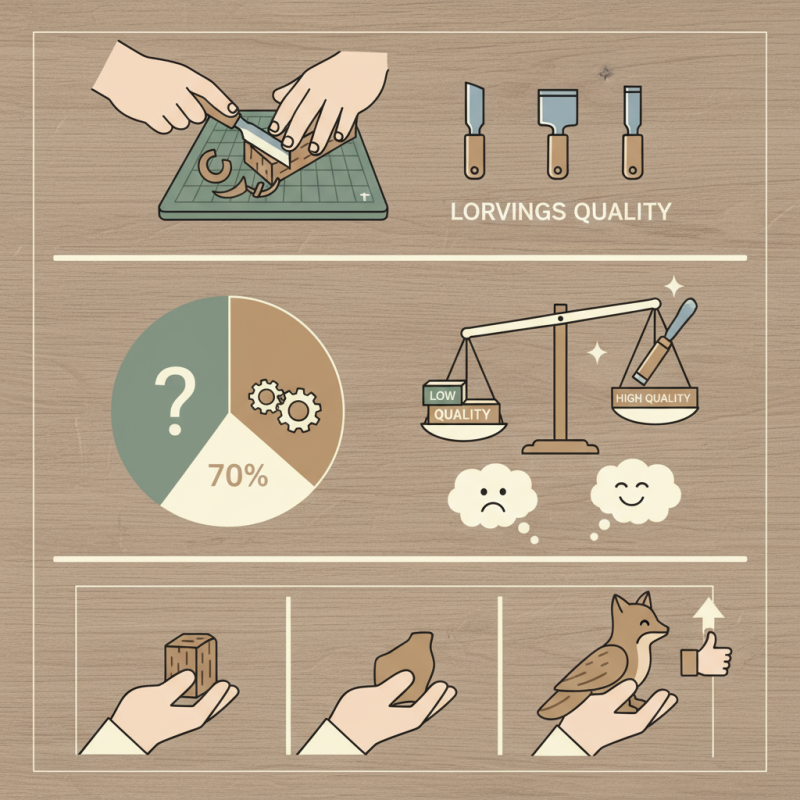
When embarking on wooden craft carving, having the right tools is essential. Hand tools form the foundation of this craft, enabling artisans to shape and detail their work. The most basic yet crucial tool is a carving knife. A good carving knife allows you to make precise cuts and curves. Choose one with a comfortable grip to reduce fatigue during long sessions.
Chisels are another indispensable tool. They come in various shapes and sizes, each serving a unique purpose. Some are designed for flat surfaces, while others help achieve intricate designs. Each chisel's angle affects the finished product, making it imperative to understand your tools. As you carve, it's common to experience minor slips or unintended cuts. These moments can be frustrating but also provide opportunities to learn and improve your technique.
Don’t forget safety equipment, such as finger guards. This protection is often overlooked, yet it’s vital for beginners. New carvers may underestimate the risks involved. Taking the time to invest in safety shows a commitment to your craft. As you practice, remember that mistakes are part of the learning process. Reflecting on your errors can enhance your skills and creativity. Embrace the journey of carving, tools in hand, and let your creativity flow.
: A good carving knife is essential for making precise cuts and curves.
Chisels come in different shapes and sizes, each with a unique purpose. Understand their angles for better results.
Safety gear, like cut-resistant gloves and goggles, protects against injuries and reduces risks while carving.
Always check tools for sharpness and condition. This helps prevent slips and potential injuries.
Clean tools after use and lubricate blades with oil to prevent rust and maintain performance.
Poorly maintained tools can decrease carving accuracy significantly, leading to frustration and unsatisfactory results.
Many beginners overlook proper tool storage, which can cause damage and lead to accidents.
Working while tired increases careless mistakes, which can result in injuries and unexpected errors.
Yes, reflecting on mistakes provides opportunities to learn and enhances your skills over time.
Embrace the imperfections and learn from them. Each error is a step towards better craftsmanship.
When embarking on your wood carving journey, it's essential to equip yourself with the right tools and knowledge. Beginners should start with a basic set of essential hand tools, such as carving knives, chisels, and gouges, which are designed to create intricate designs in wood. Understanding the different types of wood available for carving projects is also crucial, as each type offers unique qualities that can affect the outcome of your work.
Safety should always be a priority, so using proper safety equipment is vital to protect yourself while carving. Additionally, mastering basic techniques will help you develop your skills and increase your confidence. Finally, ongoing care and maintenance of your tools will ensure their longevity and effectiveness. In summary, one might wonder, "What tools do I need for basic wooden craft carving?" The answer lies in a combination of quality hand tools, a clear understanding of wood, adherence to safety protocols, and dedicated practice.
