Felicita Decor
When choosing artificial flowers, many ask, "What is the difference between silk and plastic artificial flowers?" Both types have distinct features that appeal to various preferences and needs. Silk flowers offer a realistic appearance and a soft texture, often used in high-end arrangements. Their delicate nature means they can replicate the beauty of fresh blooms closely. However, they require careful handling and may fade over time.
On the other hand, plastic flowers are durable and resistant to fading, making them ideal for outdoor use or in high-traffic areas. They can withstand harsh conditions without losing their color or shape. The downside is that they may lack the lifelike quality that silk flowers possess.
Each option serves a purpose based on context and aesthetic desires. Evaluating these differences is crucial for making an informed decision. Your choice reflects personal taste and practical considerations in home decor or event planning.
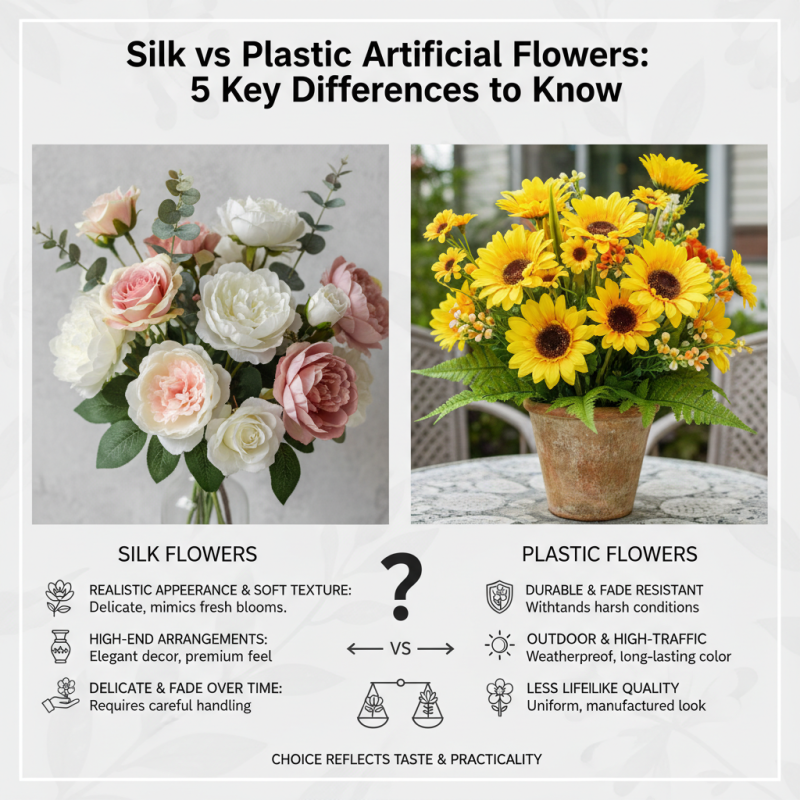
When choosing between silk and plastic artificial flowers, the material composition is a crucial factor. Silk flowers are made from natural fibers, offering a more realistic texture and appearance. They often mimic the softness of real petals. In contrast, plastic flowers are typically constructed from synthetic materials. While they can look vibrant, they often lack the depth that silk offers. According to a recent industry report, silk flowers can last longer in natural light without fading, making them a preferred choice for display in sunny areas.
Plastic flowers, however, come with their own advantages. They are generally more durable and water-resistant. This makes them ideal for outdoor settings or areas where moisture might be a concern. A study indicates that while silk flowers can fade over time, plastic options retain their color better under harsh conditions. This can sometimes lead to a less authentic look, which can be a downside for those seeking realism.
Tips: Consider where your flowers will be displayed. If indoors, silk may provide the elegance you seek. For outdoor use, plastic flowers might be a more practical choice. Pay attention to the finishing details; these small aspects can greatly influence the overall appearance.
When it comes to artificial flowers, silk and plastic are two popular options. Visual appeal plays a significant role in choosing between them. Silk flowers often mimic real blooms more closely. They feature soft textures and intricate details that create a lifelike look. The petals typically have a natural sheen, catching the light beautifully. When arranged, they can bring a touch of elegance to any space.
Plastic flowers offer a different aesthetic. They are often more vibrant in color, which can appeal to various decorating styles. However, they can look less realistic, especially up close. The rigid texture and glossy finish may expose their artificiality. Despite this, many still prefer plastic for their durability and easy maintenance.
Both materials have their pros and cons. For instance, silk flowers require more care to prevent dust accumulation. On the other hand, plastic flowers may fade over time. Choosing the right type often involves considering the intended use and ambiance. It’s essential to reflect on how much realism you desire versus practicality. The balance between appearance and utility defines your choice.
When considering artificial flowers, silk and plastic are two of the most popular materials. Their durability and longevity can impact your choice. Silk flowers are often viewed as a premium option. They are soft and vibrant, closely resembling real blooms. Research indicates they can last up to 5 years with proper care. In contrast, plastic flowers offer a different level of resilience. According to industry reports, high-quality plastic flowers can last 10 years or more. They withstand UV exposure and moisture better than silk.
For maintenance, silk flowers require gentle handling. Regular dusting is necessary to preserve their appearance. Conversely, plastic flowers are easier to clean and resistant to fading. A damp cloth usually suffices. Remember, however, that extreme temperatures can damage both materials.
**Tip:** To prolong the life of silk flowers, avoid placing them in direct sunlight.
Some users notice that silk flowers may fade over time. This could influence your long-term satisfaction. Research suggests that for outdoor use, plastic options might be preferable, as they remain vibrant under variable conditions.
**Tip:** Store plastic flowers indoors during harsh weather to extend their lifespan.
Each type of artificial flower has unique benefits and drawbacks. The decision ultimately boils down to personal preference and intended use.
When considering maintenance, silk and plastic artificial flowers offer distinct experiences. Silk flowers may appear elegant but require more attention. They can gather dust easily, necessitating regular dusting and occasional washing. Use a gentle soap solution to refresh them without damaging the fabric. Sunlight can fade silk over time, so displaying them in low-light areas is ideal.
Plastic flowers, on the other hand, are more durable and require minimal care. A simple wipe with a damp cloth usually suffices. They resist fading and can endure various weather conditions if displayed outdoors. However, they can look less realistic and may also attract dirt. Some may find them harder to clean, as their textures can trap particles. Frequent use of disinfectant wipes may also wear them out quicker.
Both types have advantages and drawbacks. Silk flowers may need more care, but they offer a lifelike appearance. Plastic flowers are practical but can lack charm. Understanding these differences helps in making the right choice for your space.
Artificial flowers have become a popular decor choice. However, the environmental impact of silk and plastic options raises significant concerns. Silk flowers, made from natural fibers, offer a more sustainable option, but their sourcing can sometimes harm ecosystems. Reports indicate that silk production can require vast amounts of water and land. These factors complicate the argument for silk's overall sustainability.
On the other hand, plastic flowers explore a different path. While often cheaper and longer-lasting, they contribute to growing plastic waste. According to a recent study, only 9% of plastic waste is recycled globally. The production process for plastic also emits greenhouse gases. These facts highlight a crucial dilemma: durability versus environmental health. Each choice carries its own set of implications.
In making a decision, it’s vital to consider these factors carefully. While silk flowers may appear more eco-friendly, their production methods warrant scrutiny. Plastic flowers might contribute to waste but are practical for many consumers. Balancing aesthetics, durability, and environmental impact remains a challenge. Thoughtful choices can make a significant difference.
: Silk flowers use natural fibers, providing a realistic texture. Plastic flowers are synthetic and often lack depth.
Silk flowers generally withstand natural light better, while plastic may fade less but can look less authentic.
Yes, silk flowers collect dust and need regular dusting and occasional washing with gentle soap.
A damp cloth is usually enough. They resist fading, but can attract dirt due to their texture.
Plastic flowers are more durable and weather-resistant, making them ideal for outdoor settings.
Yes, silk flowers can fade with prolonged exposure to sunlight, so low-light areas are better for display.
Small finishing details can greatly influence how realistic the flowers look, making attention to detail important.
Yes, their textures may trap dirt, making them more challenging to maintain compared to silk flowers.
Yes, they require more attention but offer a lifelike appearance. Maintaining them can be a bit more tedious.
Often, yes. While practical, plastic flowers may lack the natural beauty that silk flowers provide.
When exploring the question, "What is the difference between silk and plastic artificial flowers," several key factors come into play. The material composition is the first distinction, with silk flowers made from natural fibers and offering a soft texture, while plastic flowers tend to be more durable but may lack a realistic feel. A visual comparison highlights the realism and aesthetic appeal of silk flowers, which often resemble real blooms more closely than their plastic counterparts.
Durability is another important consideration; plastic flowers typically endure weather and wear better over time, making them suitable for outdoor use, whereas silk flowers may fade and require more careful handling. Maintenance needs also differ, as silk flowers often require gentle cleaning and care, while plastic flowers can be easily wiped down. Finally, the environmental impact is worth noting, as silk is biodegradable, presenting a more sustainable choice compared to plastic. Understanding these differences can help consumers make informed decisions when selecting artificial flowers for their needs.
